
LE POUVOIR – finances
Signification principale
Signification inversée
Description
In terms of finances, STRENGTH is about not fighting with money, but rather handling it.
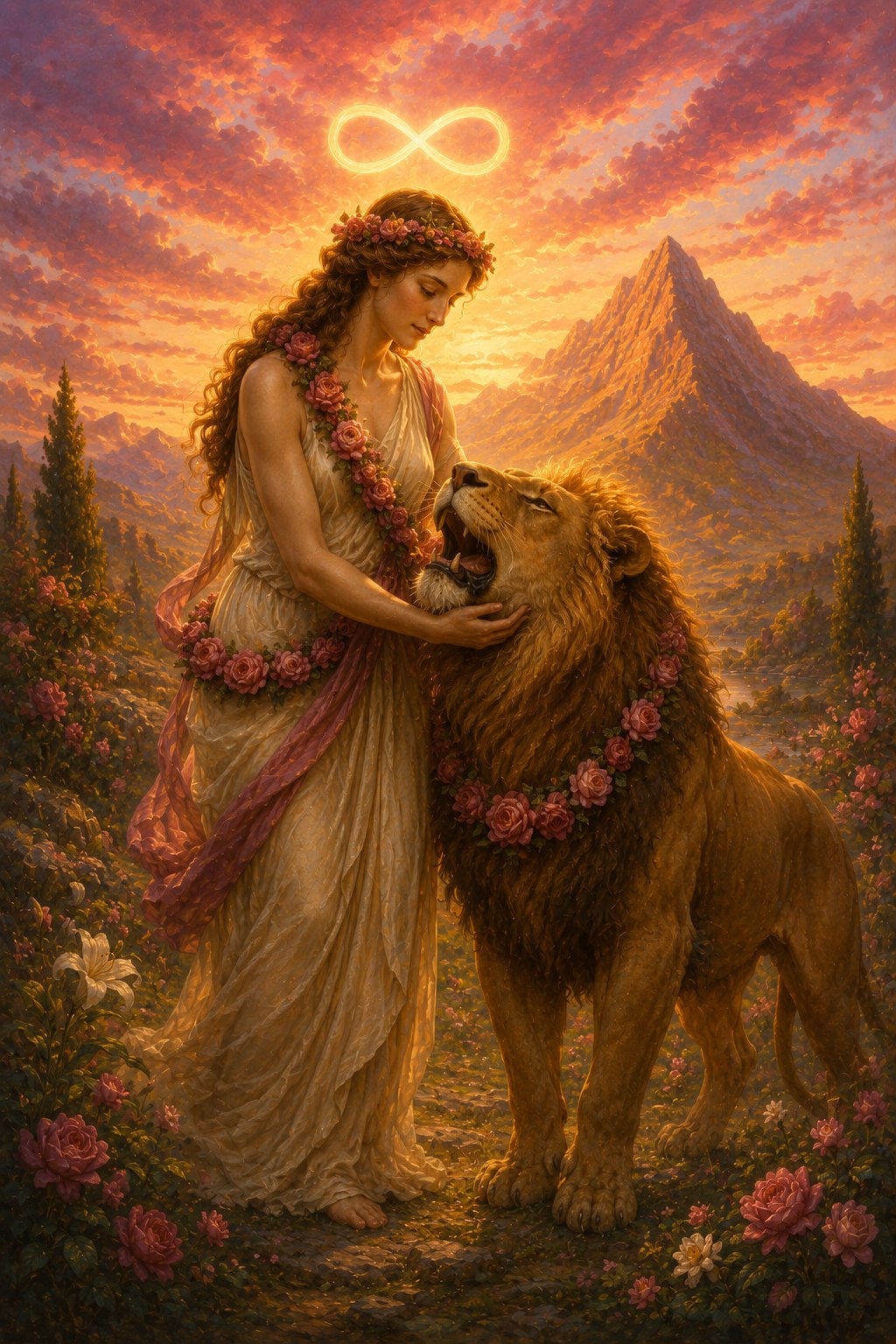
Look closely at the card, where a woman in a white dress bends over a huge lion, holding its head with both hands — not squeezing, but caressing it, while the animal's mouth is open, yet it does not bite.
Here, the lion represents your appetite: the desire that buys, the lack that spends, the voice that tells you that you deserve this now. And notice what holds it: not a chain, not a rope, but a rosary — a leash woven from flowers.
This is the most important message of this card about money, because it tells you that strict prohibition does not work: for someone who ties up their appetite with an iron chain, the animal will sooner or later break free, and then in a single evening, as much will be spent as was saved in three months. Every strict diet ends with this scene.
So, do not kill the lion, because with that you would kill what you live for — without desire, you will not become a thrifty person, only joyless. Hold it gently: ask it what it truly wants, because what you buy is almost never what you need.
Its shadow side is self-flagellation: the hand that caressed turns inward, and you scold yourself after every bill. This is not frugality, but punishment — and a punished person spends in secret.
Above its head floats the horizontal eight, the sign of infinity: willpower runs out, but patience regenerates. Wealth is not built from heroic assaults, but from small, boring, repetitive movements that no one sees.
And notice the animal's tail: it hangs down, it doesn't lash, because this lion is not defeated, but calmed. This is what a person looks like who doesn't have to struggle with their own money every month — not because they have more, but because they are at peace with it.
This week, do not make any loud promises. Just make a quiet move, and don't scold yourself if it's not perfect.
Message
What you buy is almost never what you truly need.
Look closely at the card, where a woman in a white dress bends over a mighty lion, holding its head with both hands — not squeezing, but caressing it, while the animal's mouth is open, yet it does not bite.
This lion is your appetite: the desire that buys, the lack that spends, the voice that tells you at ten in the evening that you deserve this now.
And notice what holds it: not a chain, not a rope, not a strap, but a rosary. The beast wears a leash woven from flowers.
This is your message tonight, because strict prohibition doesn't work: for those who bind their appetite with an iron chain, the animal will sooner or later break free — and then in a single evening, as much will be spent as was saved over three months. Every harsh diet ends with this scene, whether it's about food or money.
So do not kill the lion, for with it you would kill what gives you life: without desire, you will not be a thrifty person, just joyless. Hold it gently, and ask it what it truly wants — because it's almost never the object that's needed, but the feeling it promises.
Now look at the woman's hand, for it does not tear at the jaw, but holds it, as one holds the face of a sick child. This is how you should deal with your own financial mistakes.
Its shadow, you see, is self-flagellation: the hand that caressed turns inward, and you scold yourself after every bill. This is not thrift, but punishment — and now pay attention, because this is the essence: a punished person spends in secret.
And above its head floats the horizontal figure eight, the symbol of infinity. Willpower runs out, but patience regenerates — and wealth is not built from heroic assaults, but from small, boring, repetitive movements that no one ever sees.
Today, do not make any loud promises. Make a quiet gesture, and do not scold yourself if it is not perfect.
In a reversed position, exhaustion is at work: someone who has been holding the jaw for years is not disciplined, just tired — and a tired person will sooner or later let go of everything all at once.